
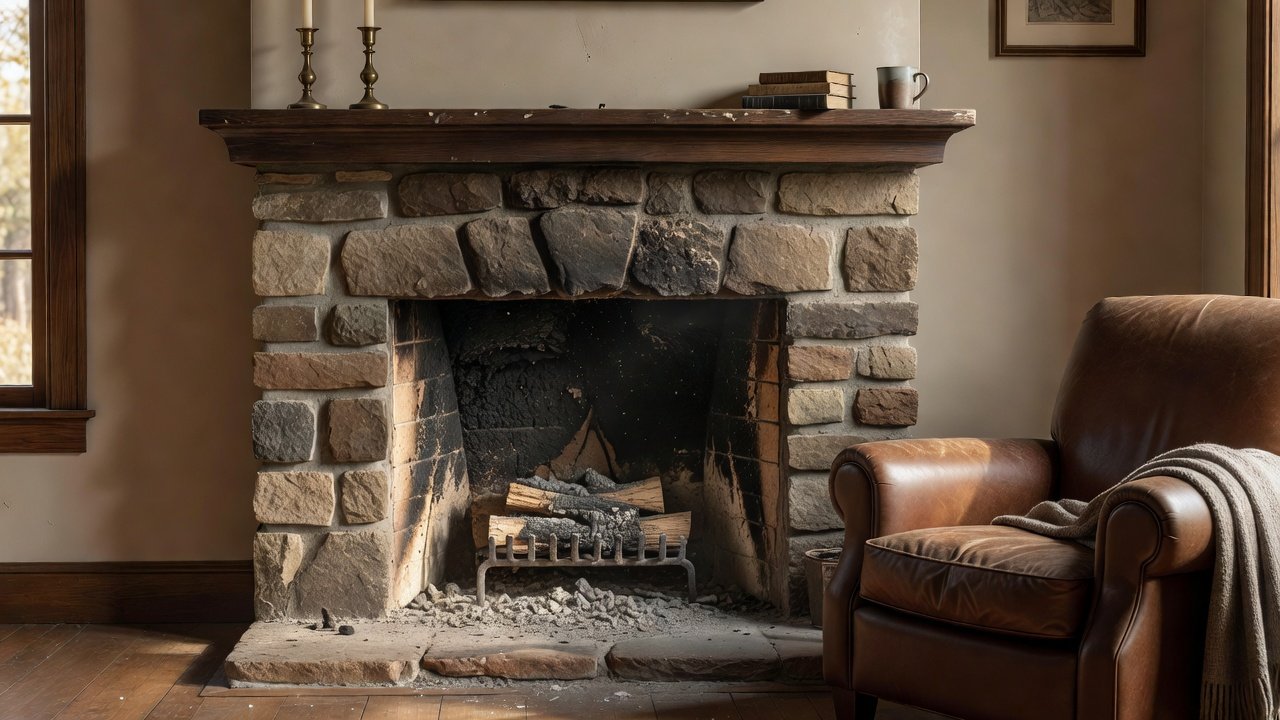
Don’t Ignore What Your Fireplace Is Trying to Tell You
Most Passaic homeowners don’t think about fireplace cleaning until something goes wrong.
A house on Paulison Avenue loses heat efficiency all winter because the damper is coated with creosote. A family in Clifton calls 911 after smoke backs up into a living room they’ve used for decades without incident. These aren’t worst-case scenarios pulled from a manual. They’re the kinds of calls chimney professionals in Passaic County receive every season.
The mistake isn’t necessarily neglect.
It’s assuming that a fireplace that lights is also a fireplace that’s safe.
Those are two very different things.
NFPA 211, the standard most chimney professionals and fire marshals follow, recommends that chimneys, fireplaces, and vents be inspected at least once a year and cleaned whenever deposits warrant it.
The Chimney Safety Institute of America (CSIA) echoes this recommendation, noting that a creosote buildup of just one-eighth of an inch is enough to justify immediate cleaning.
One-eighth of an inch is thinner than two stacked pennies.
Most homeowners have never measured it at all.
Below are the warning signs that your fireplace in Passaic needs professional cleaning now—not next fall, and not after one more fire.
White or Gray Staining on the Firebox Walls
That chalky residue on the interior brick isn’t simply cosmetic.
It’s called efflorescence, and it forms when moisture moves through masonry, carrying mineral salts to the surface.
Inside a firebox, it usually indicates that water is entering the chimney system, accelerating creosote buildup and causing mortar joints to deteriorate more quickly than normal.
During Passaic County’s freeze-thaw winters, this combination can lead to significant structural damage within just a few seasons.
Call a professional now.
Efflorescence inside the firebox isn’t something to simply monitor.
A Thick, Oily Film on the Glass Doors
If your fireplace has glass doors and you regularly wipe them down, pay attention to what’s collecting on the glass.
A thin gray film is normal.
A dark, oily, tar-like residue that quickly returns—or smears instead of wiping away cleanly—is often a sign of Stage 2 or Stage 3 creosote.
The CSIA classifies creosote into three stages.
Stage 3 creosote is glazed, extremely difficult to remove, and capable of igniting at temperatures a chimney flue can realistically reach.
Call a professional now.
Stage 2 and Stage 3 creosote require specialized removal equipment.
Smoke Entering the Room Instead of Going Up the Chimney
An occasional puff of smoke can happen for harmless reasons, such as a cold flue, changing wind conditions, or a damper that wasn’t fully opened.
However, repeated smoke entering your living space or smelling smoke when the fireplace isn’t in use is a different matter.
Throughout Passaic and Garfield, these symptoms are commonly caused by:
- Debris inside the flue
- Bird or squirrel nests
- Heavy creosote accumulation near the smoke chamber or smoke shelf
Call a professional now if this has happened more than once or if you notice smoke odors while the fireplace is idle.
Visible Creosote Flakes in the Firebox
Open the damper and shine a flashlight into the flue.
If you notice black flakes, chunks, or honeycomb-like deposits falling into the firebox, those materials have broken away from creosote deposits lining the chimney.
That usually means there’s considerably more buildup remaining higher inside the flue.
Those loose deposits are highly combustible.
Call a professional now.
A Persistent Campfire Smell When the Fireplace Isn’t Being Used
Creosote absorbs moisture during humid weather.
Passaic summers provide plenty of humidity.
As creosote absorbs that moisture, it often releases a sharp, smoky odor that travels down the chimney and into your home.
Many homeowners spend weeks trying to locate the source before realizing the chimney is responsible.
If your living room smells like a campfire in July, there’s a strong possibility your chimney has accumulated significant creosote that hasn’t been cleaned in quite some time.
Monitor the situation only if the odor is extremely faint and your chimney was professionally cleaned within the past year.
Otherwise, call a professional.
Crumbling or Missing Mortar Between Firebox Bricks
Take a close look at the mortar joints between the firebox bricks.
They should appear solid, smooth, and firmly in place.
If the mortar is crumbling, recessed, or soft enough to scrape with your fingernail, it should be repaired before using the fireplace again.
A deteriorated firebox allows excessive heat and combustion gases to reach combustible materials hidden behind the masonry.
In Passaic’s older homes many built during the early to mid-1900s this type of deterioration is more common than many homeowners realize.
Call a professional now.
A Level 1 chimney inspection will document the condition of the firebox and identify whether repairs are necessary.
Rust on the Damper or Other Fireplace Components
A small amount of surface rust on a damper plate isn’t unusual.
However, rust that has deeply pitted the metal, prevented the damper from opening or closing properly, or spread into the throat of the chimney becomes a functional problem.
A damper that doesn’t seal correctly allows cold winter air to enter your home while letting heated air escape through the chimney.
It can also provide an easy entry point for animals.
Monitor minor surface rust.
Call a professional now if the damper sticks, doesn’t operate smoothly, or no longer seals tightly.
What Fireplace Cleaning Typically Costs in Passaic
A professional chimney and fireplace cleaning in Passaic typically ranges from $150 to $300 for a single-story home with a straightforward chimney system.
Homes with taller chimneys, heavier creosote buildup, or fireplaces that haven’t been serviced for several years may cost more.
In most cases, that price includes a Level 1 chimney inspection performed in accordance with NFPA 211, documenting the condition of the:
- Firebox
- Chimney liner
- Damper
- Chimney cap
Waiting until a chimney fire occurs is almost always far more expensive.
Residential chimney fires frequently cause thousands of dollars in damage, and homeowners may encounter insurance complications if regular chimney maintenance cannot be documented.
The Common Thread Behind Most Chimney Problems
The homeowners who experience the most serious chimney problems usually aren’t careless.
They’re people who used their fireplace without incident for several seasons and assumed everything was still in good condition.
The warning signs were there.
The smoky odors.
The white staining.
The creosote flakes.
The sticking damper.
Without knowing what those symptoms meant, they were easy to overlook.
Now you know what to watch for.
If you’ve noticed one or more of these warning signs in your Passaic, Clifton, or Garfield home, schedule a professional chimney inspection before lighting your next fire.
Chimney Passaic proudly offers free fireplace inspections throughout Passaic County.
Contact us today to schedule your inspection and head into the heating season knowing your fireplace is truly safe not just functional.