
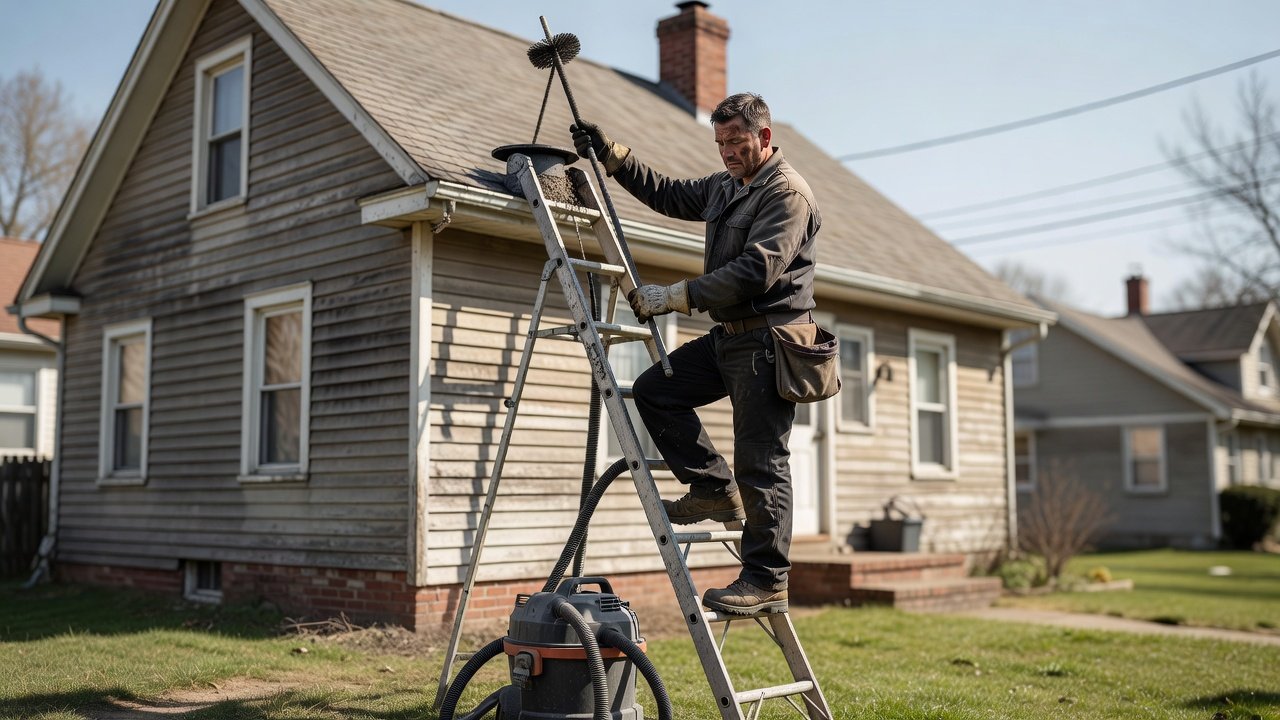
What Chimney Sweeping Actually Costs in Passaic County and Why the Price Varies More Than You’d Think
Most homeowners searching for a chimney sweep near Passaic, NJ are asking two questions: Is my chimney safe, and am I going to get overcharged? Both concerns are reasonable. Chimney service pricing can vary significantly depending on the condition of the system, the type of inspection required, and the work involved. For homeowners in Passaic, Clifton, Garfield, and surrounding Passaic County communities, understanding what is included in a chimney service can make it easier to compare quotes and avoid unnecessary expenses.
“A Chimney Sweep Should Cost $50 or Less”
Discount chimney cleaning offers can sometimes advertise prices as low as $49, but that price does not necessarily represent the full cost of a professional chimney service. A Level 1 chimney inspection combined with cleaning typically costs between $150 and $300 in northern New Jersey, depending on the complexity of the chimney and the services included.
Professional chimney sweeps have equipment and operating costs that a very low-cost service may not cover. A reputable company should also be able to explain what is included in the quoted price before work begins. Homeowners should be cautious of companies that advertise an unusually low introductory price and then use the appointment to pressure them into expensive repairs without providing supporting documentation.
The NFPA 211 standard calls for annual inspection of chimneys in regular use. A professional inspection is an important part of maintaining the system and identifying problems before they become more expensive.
“Cleaning and Inspection Are the Same Thing”
Cleaning and inspection are related, but they serve different purposes.
A chimney sweep removes combustible deposits such as creosote and soot from the flue, smoke chamber, and firebox. An inspection evaluates the structural and operational condition of the chimney system.
A Level 1 inspection is generally appropriate when the chimney system has not changed and has been regularly maintained. A Level 2 inspection provides a more detailed evaluation and can include video scanning of the flue interior. The source notes that Level 2 inspections may be appropriate after events such as a chimney fire, home sale, or significant weather event.
A Level 2 inspection typically costs more, with the source estimating approximately $300 to $500 depending on the system. The additional cost reflects the equipment and documentation involved, including camera footage and a more detailed assessment of the flue.
“If There’s No Visible Problem, There’s Nothing to Clean”
Creosote buildup can develop without obvious warning signs. A homeowner may not notice anything unusual in the firebox or during a fire even when deposits are accumulating inside the flue.
The source notes that homeowners who use their fireplaces several nights per week during winter can develop significant deposits, particularly when burning unseasoned wood or maintaining lower-temperature fires.
Warning signs can include a strong fireplace odor during warmer months, smoke backing into the room, or sticky black residue around the damper. The source also notes that CSIA guidance recommends cleaning when creosote or soot reaches approximately one-eighth of an inch or more.
Regular inspection allows a technician to determine whether cleaning is necessary and whether other problems are present inside the chimney.
“Any Handyman Can Do This”
Chimney work involves more than simply running a brush through a flue. Proper service requires an understanding of combustion, venting, fire safety, and masonry.
The CSIA Certified Chimney Sweep credential is one qualification homeowners can look for when choosing a technician. The National Fireplace Institute also provides certification for professionals working with fireplace and gas appliance systems.
The source notes that structural chimney repairs or liner installations may also involve licensing or permit requirements depending on the municipality. Homeowners in Passaic County should confirm that contractors have the appropriate credentials, insurance, and documentation for the work being performed.
Choosing a contractor based only on the lowest price can also create problems if an important issue is missed. A damaged flue liner or deteriorated chimney crown can become significantly more expensive to repair after another season of moisture and heat exposure.
“Chimney Repair Is Always a Major Expense”
Some chimney repairs can be costly. A full stainless steel liner installation on a two-story home in Passaic can cost approximately $2,500 to $5,000, depending on the flue diameter and length.
However, not every problem requires major reconstruction. Smaller issues such as deteriorated mortar joints, a partially seized damper, or minor gaps can often be addressed before they develop into larger repairs.
The important factor is having the problem documented. A written estimate that identifies the specific issue, recommended repair, and associated cost gives homeowners something they can review or use when seeking a second opinion.
Older homes throughout Passaic County can be particularly vulnerable to masonry deterioration because many chimneys have been exposed to decades of weather, moisture, and freeze-thaw cycles. Addressing smaller problems early can help prevent more extensive damage later.
Schedule a Free Inspection Before the Heating Season
Chimney Passaic serves homeowners throughout Passaic County, including Passaic, Clifton, Garfield, and surrounding communities. Our CSIA-certified sweeps provide chimney inspections and use documented findings to help homeowners understand the condition of their systems.
Contact us to schedule a free inspection before the heating season gets busy. You’ll have a clearer understanding of what your chimney needs and what the work is expected to cost before making a decision.
Related from Chimney Passaic NJ: Annual Chimney Inspection County – Professional Chimney Safety Inspect · What a Chimney Sweep Actually Costs in Passaic County and What Moves t