
Annual Chimney Inspection in Passaic, NJ
An annual chimney inspection is a structured, top-to-bottom evaluation of your chimney’s interior flue, liner, firebox, damper, crown, and exterior masonry, performed once a year to catch deterioration and fire hazards before they become emergencies. In Passaic, where older two-family and row homes along Paulison Avenue and Monroe Street regularly have chimneys dating back 50 to 80 years, that yearly check is frequently the only thing standing between a small crack and a house fire. The National Fire Protection Association (NFPA 211) recommends an annual chimney inspection for any chimney that sees regular use, regardless of how clean it appears.
Why fall is the right time to schedule in Passaic
Most Passaic homeowners start firing up their wood-burning fireplaces or gas inserts in October, once temperatures drop into the 40s overnight. Scheduling your annual chimney inspection in September or early October means any repairs get done before the first cold snap, not during it. A cracked flue tile or a deteriorated mortar joint that spent summer sitting quietly becomes a carbon monoxide pathway the moment you light a fire. Winter scheduling is possible, but crews are in higher demand and access to certain exterior sections of the chimney is harder when ice forms on rooflines.
Who actually needs this service
Any Passaic property with a chimney attached to a functioning or recently-unused fireplace, wood stove, gas appliance, or oil furnace flue qualifies. That includes:
- Single-family homes where the fireplace is used several times each winter
- Two-family and multi-unit properties, where the landlord carries legal responsibility for chimney safety under New Jersey housing code
- Homeowners who haven’t used the fireplace in a year or more (inactive chimneys attract nesting birds and small animals, particularly chimney swifts, which are federally protected)
- Anyone who bought a home in the past 12 months and doesn’t have inspection records from the previous owner
- Properties that experienced a chimney fire, even a small one that seemed to burn itself out
If your home has an oil-fired boiler venting through a masonry flue, that flue needs inspection too. It’s not just for wood fires.
What our inspection covers, step by step
We follow NFPA 211 Level 1 and Level 2 standards depending on what the initial visual assessment reveals. Here’s the sequence we use on every Passaic property.
Exterior check first
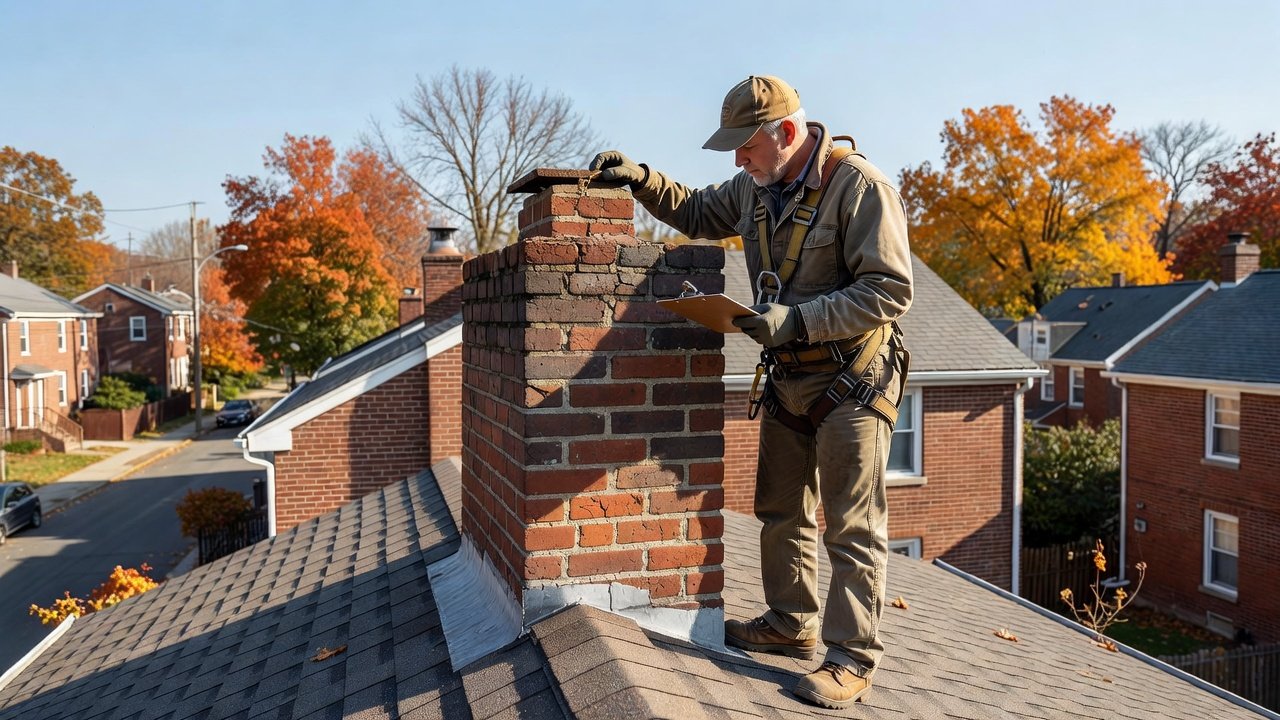
We start on the roof. The chimney crown, which is the concrete cap that seals the top of the masonry stack, is one of the first things to crack in New Jersey’s freeze-thaw winters. We check the crown, the flashing where the chimney meets the roofline, and the condition of the brick or block mortar joints. Spalling bricks, open mortar joints wider than a credit card, and rust staining from the cap all get noted.
Flue and liner examination
For most inspections we use a high-resolution camera system lowered through the flue from the top. The camera feed lets us see liner cracks, gaps between clay tile sections, creosote deposits at different levels, and any blockages from animal nesting or debris. On older Passaic homes with unlined chimneys, we document the absence of a liner explicitly because that condition affects safe appliance sizing and often needs to be disclosed on property sales.
Firebox and damper
Inside the home we inspect the firebox for spalling firebrick, deteriorated refractory mortar, and smoke chamber condition. We test the damper for full open and close function. A damper that doesn’t seal properly wastes heat all winter; one that won’t fully open restricts draft and pushes smoke back into the living space.
Written report
Every inspection ends with a written summary that lists what we found, photographs from the camera system where applicable, and a clear breakdown of anything that needs repair. We don’t generate inflated repair lists. If the chimney is clean and structurally sound, we say so.
What the inspection does not include
A standard annual inspection is not the same as a chimney sweep. Inspecting and cleaning are separate services, though they’re often done on the same visit if the flue shows significant creosote buildup. If sweeping is needed, we’ll tell you upfront with a separate quote before any additional work begins. You won’t be charged for a sweep you didn’t authorize.
Passaic-specific details worth knowing
Passaic’s housing stock is older than most of Bergen County. Many homes in the Central Ward and Lakeview neighborhoods were built between 1910 and 1950, with chimneys that used unlined clay tile or, in some cases, no liner at all. When those homes switched from coal to oil heat decades ago, and later had wood-burning inserts added, the flue sizing and liner condition often weren’t revisited. Our inspection process specifically accounts for this history. We know what a converted coal flue looks like, and we know how to assess whether it’s safely handling whatever appliance is currently connected to it.
We’re also familiar with Passaic’s roofline styles, including the flat-to-low-pitch roofs common on its row homes, which affect how we access and inspect taller chimney stacks safely.
Frequently Asked Questions about annual chimney inspection in Passaic
How long does an annual chimney inspection take in Passaic, and do I need to be home?
Most inspections take between 45 minutes and 90 minutes, depending on chimney height, accessibility, and whether we find anything that needs closer examination. You do need to be home or have an authorized adult present. We need interior access to the firebox and, on multi-story properties, sometimes to upper floors to assess a chimney that runs through the center of the building.
Is a Level 1 inspection enough, or do Passaic homes typically need a Level 2?
A Level 1 inspection covers accessible areas and is appropriate for a chimney that’s been inspected recently and hasn’t had any changes to the connected appliance. Passaic homes often warrant a Level 2, which includes camera scanning of the full flue, because many haven’t had a documented inspection in years and some have had appliances changed without a corresponding flue evaluation. We assess which level is appropriate when we arrive and explain the reason before proceeding.
What happens if the inspection finds a problem — am I required to repair it immediately?
No. The inspection report is yours. We’ll explain clearly what we found, what risk it carries, and what the repair involves. Some issues, like a hairline crack in a clay tile with no active deterioration, can be monitored. Others, like a flue that’s completely separated from its liner sections, make the fireplace unsafe to use until it’s fixed. We give you an honest assessment of urgency and a written quote for any repair work. You choose how to proceed.
Schedule your annual chimney inspection before heating season starts
September and October appointments fill quickly in Passaic. If you want your chimney cleared for use before the first cold night, the time to call is now. We serve all Passaic neighborhoods including Lakeview, Dundee, and the Central Ward, and we carry full liability insurance on every job.
Call us or use the contact form below to book your annual chimney inspection. We’ll confirm your appointment within one business day.
Related from Chimney Passaic NJ: Annual Chimney Inspection County – Professional Chimney Safety Inspect · Chimney Liner Repair in Passaic, NJ
Worth knowing
City chimneys work hard — multi-family flues, oil-to-gas conversions, and old brick all age faster than people think. Catching deterioration early keeps a repair from becoming a rebuild.