
Published November 4, 2026
When to Schedule Chimney Cleaning in Passaic, NJ and What the Job Actually Involves
Many Passaic homeowners think about chimney cleaning when the first cold night arrives or when they notice an unusual fireplace odor. By then, other homeowners may already be calling local chimney companies to prepare for the heating season.
Scheduling ahead gives you more flexibility and time to address problems before you need the fireplace. It also gives a technician an opportunity to identify creosote buildup, blockages, and damage before regular use begins.
Here’s when to schedule chimney cleaning in Passaic, NJ, what a professional appointment typically involves, and why delaying maintenance can lead to more expensive problems.
Why Chimney Cleaning Timing Matters in Passaic
Passaic homeowners who use wood-burning fireplaces should pay attention to what accumulates inside the chimney throughout the heating season. Each fire produces combustion byproducts, including smoke particles, water vapor, and other substances that can condense along the flue walls.
One of the resulting deposits is creosote. It can appear as flaky material, sticky tar-like deposits, or hard, glazed buildup. Because creosote is combustible, allowing it to accumulate can increase the risk of a chimney fire.
The Chimney Safety Institute of America (CSIA) recommends having chimneys inspected at least once a year. The National Fire Protection Association’s NFPA 211 standard also calls for annual inspections, with cleaning, maintenance, and repairs performed when necessary.
That distinction matters: annual inspection does not automatically mean every chimney needs a full cleaning every year. The amount of use, type of fuel, installation, and condition of the system help determine when cleaning is necessary.
The Connecticut Department of Consumer Protection recommends scheduling chimney service in late spring or early summer, after the heating season. Although this is not a Passaic-specific scheduling rule, it is practical advice for homeowners who want time to arrange repairs before fall.
Season by Season: When to Schedule Chimney Cleaning in Passaic
Late Summer (August through Mid-September)
Late summer is a convenient time to arrange chimney cleaning and inspection. The main heating season has passed, and homeowners still have time to address any problems before colder weather returns.
A technician can check for creosote buildup, debris, damaged masonry, and other conditions that may need attention. If the inspection identifies a repair, you can compare estimates and schedule the work before regular fireplace use begins.
Booking during this period may also give you more appointment flexibility than waiting until fall. Actual availability depends on the company and local demand.
Early Fall (Mid-September through October)
Early fall is another practical scheduling window. Homeowners begin preparing fireplaces, wood stoves, and heating systems for colder weather.
Demand for chimney services may increase as the season approaches. Scheduling before the first sustained cold spell gives you more time to arrange an inspection and any recommended cleaning.
If you have not had the chimney inspected within the past year, do not assume it is ready simply because it looks clean from the fireplace opening.
Late Fall (November Through Thanksgiving)
Late fall can be a busy period for chimney companies. Many homeowners wait until temperatures drop before arranging service, which can make preferred appointment times harder to find.
If a technician discovers heavy creosote buildup, a blockage, or damaged flue components, additional work may be necessary before the fireplace can be used safely.
Some conditions involving hardened or glazed creosote may require specialized professional cleaning methods. A routine brush cleaning may not be sufficient for every type of deposit.
Winter (December Through February)
Chimney cleaning and inspections can still be performed during winter. If you have recently moved into a Passaic home and do not know the chimney’s maintenance history, arrange an inspection before using the fireplace.
You should also seek professional evaluation if you notice unusual odors, excessive smoke entering the room, or debris falling into the firebox.
Do not continue using a fireplace when you suspect a blockage or damage. Stop using it until a qualified professional has assessed the problem.
Spring (March Through May)
Spring is an excellent time to arrange chimney maintenance after the heating season. It gives homeowners an opportunity to address creosote buildup, debris, and damage before the next winter.
CSIA notes that chimney odors can become more noticeable during humid weather because moisture and air movement can make creosote smells more apparent.
Spring is also a useful time to check for animal entry or damaged chimney caps. If you suspect a nest or wildlife obstruction, have it assessed before using the fireplace again.
What Professional Chimney Cleaning Actually Involves
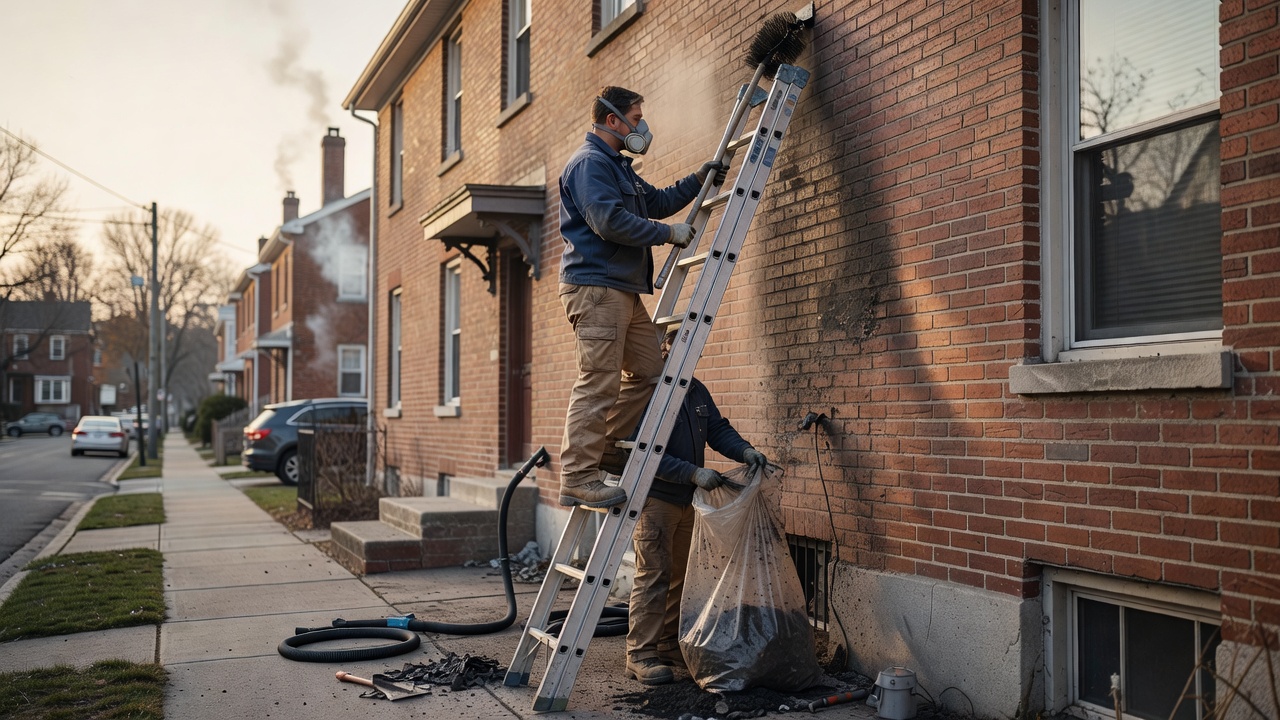
A professional chimney cleaning is more than vacuuming the fireplace and brushing away visible soot. The technician should evaluate the system, identify deposits or obstructions, and use appropriate equipment to clean the areas that need attention.
Although procedures vary by chimney design and appliance, a typical appointment may involve the following steps.
1. Prepare and protect the work area
The technician typically begins by examining the fireplace or appliance and protecting the surrounding area with drop cloths or other coverings.
A professional dust collection system is used to help contain soot and debris during the cleaning process. Proper preparation helps prevent loose material from spreading into the living space.
2. Examine the firebox and accessible components
The technician checks the firebox, damper, smoke chamber, and other accessible components as appropriate for the system.
They look for visible damage, debris, soot, creosote, and signs that the chimney may not be functioning correctly.
3. Clean the flue
For a typical wood-burning chimney, the technician uses brushes and other suitable equipment to remove soot and creosote deposits from the flue walls.
The equipment must be appropriate for the chimney’s material, dimensions, and condition. Some systems may require different cleaning methods depending on the type of deposits present.
4. Remove soot and debris
As deposits are loosened, the technician collects the material using suitable vacuum equipment and cleaning tools.
The goal is to remove the loosened soot, creosote, and debris rather than allowing it to remain in the firebox, smoke chamber, or other parts of the system.
5. Complete the inspection
After cleaning, the technician evaluates the accessible components and documents any concerns.
A camera inspection may be recommended when the condition of the flue liner needs closer examination. It is not automatically included in every standard cleaning appointment.
If the technician finds a damaged liner, significant creosote deposits, or another concern, ask for an explanation and photographs when available.
How Long Does Chimney Cleaning Take?
A straightforward appointment for a single fireplace may take around one to two hours, although the actual time varies.
The chimney’s height, accessibility, condition, amount of buildup, and number of flues can affect the duration. Additional inspection work or repairs may require a separate appointment.
Ask the company how long to expect when booking.
What Waiting Too Long Can Cost
Delaying chimney maintenance can allow certain problems to develop further. The final cost depends on the condition of the system and the work needed to restore it.
Heavy creosote buildup
Creosote can become more difficult to remove as deposits accumulate and harden. Ordinary brushing may be effective for some deposits, but heavily glazed material can require specialized equipment or professional treatment before it can be removed.
CSIA explains that mechanical cleaning is important and that chemical products should not replace professional inspection and cleaning.
Liner damage
A cracked or deteriorating flue liner can allow heat and combustion gases to reach areas that should remain protected. If damage is suspected, a professional may recommend a more detailed inspection and appropriate repairs.
A small visible defect does not automatically mean the entire liner needs replacement. The extent of the damage must be assessed before a repair recommendation is made.
Blockages and ventilation problems
Leaves, animal nests, and other debris can obstruct a chimney. A blockage may interfere with proper venting and contribute to smoke or combustion gases entering the home.
If smoke repeatedly enters the living space, stop using the fireplace and arrange an inspection. Maintain working carbon monoxide alarms and follow emergency guidance if an alarm sounds.
Masonry and moisture damage
Cracked crowns, deteriorating mortar joints, damaged flashing, and water intrusion can affect the chimney’s exterior structure.
Identifying these problems early may help prevent additional deterioration. However, the appropriate repair depends on the source and extent of the damage.
The Best Move You Can Make Before Heating Season
If your Passaic chimney has not been inspected within the past year, schedule an appointment before regular fireplace use begins. Spring, summer, and early fall can give you more flexibility to arrange service and complete any recommended repairs.
If you are already in the middle of the heating season, do not assume you have missed your opportunity. Contact a qualified chimney company and ask about its current availability.
Chimney Passaic serves homeowners in Passaic and surrounding Passaic County communities. Contact the company to ask about chimney cleaning, inspection services, and current appointment availability.
If a free inspection is being offered, confirm what it includes and whether cleaning or additional services carry separate charges. A professional assessment can help you understand the condition of your chimney and what work, if any, is necessary before using it regularly.
Related from Chimney Passaic NJ: Chimney Sweep in Passaic, NJ – Professional Cleaning & Safety Inspecti · Annual Chimney Inspection County – Professional Chimney Safety Inspect