
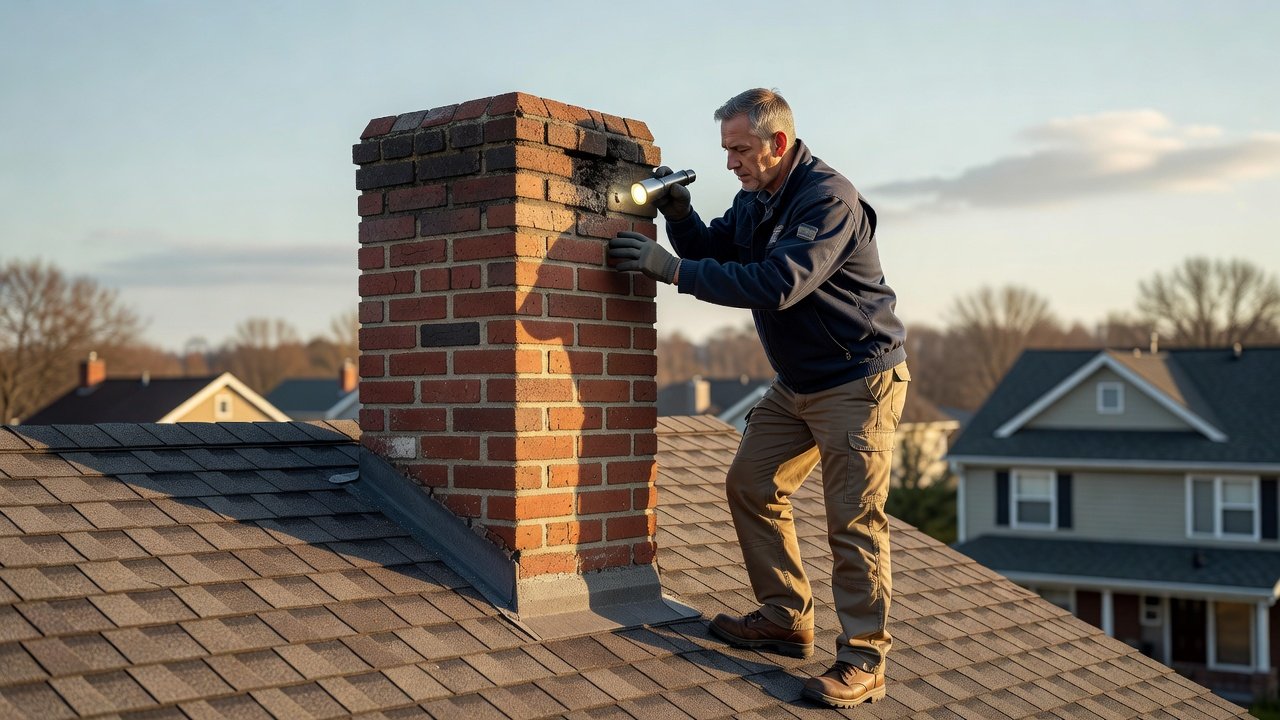
Your Chimney Is Telling You Something — Are You Listening?
Most chimney damage in Woodland Park does not begin with a collapse or a house fire. It often starts with something small that a homeowner notices and dismisses: an unusual smell, a crack that was not there last winter, or a stain on the ceiling that is difficult to explain. By the time the problem becomes obvious, the repair can be more complicated and expensive. Learning to recognize early warning signs can help you determine when to monitor a problem and when to call a professional for chimney repair in Passaic, NJ. It also helps to know how to choose a qualified contractor, because the quality of an inspection or repair can affect the safety and condition of your chimney system.
Why Woodland Park Homeowners Should Pay Attention to Chimney Damage
Woodland Park experiences freezing temperatures and seasonal weather changes that can contribute to moisture-related masonry deterioration. Water can enter small cracks or damaged areas, and repeated freezing and thawing can worsen existing deterioration.
Older chimneys can be especially vulnerable when mortar joints, crowns, flashing, caps, or liners have not been maintained. That does not mean every older chimney has a problem, but it does make regular inspection important.
NFPA 211 calls for chimneys, fireplaces, and vents to be inspected at least once a year for soundness, deposits, and proper clearances. CSIA follows this annual inspection guidance and recommends that chimneys be cleaned, maintained, or repaired when necessary.
Warning Signs That Mean You Should Call a Professional
White Staining on the Exterior Brick
Chalky white residue on chimney masonry is known as efflorescence. It occurs when moisture moves through masonry and carries soluble salts toward the surface.
Efflorescence does not identify the exact source of the water by itself, but it can be a sign of moisture movement that deserves investigation. A professional can check the crown, cap, flashing, mortar joints, and other areas that may allow water into the chimney.
If the staining keeps returning, do not simply brush it away and assume the problem is solved.
Cracked, Crumbling, or Recessed Mortar Joints
Look at the mortar between the bricks from a safe location on the ground. Cracks, missing sections, significant erosion, or crumbling mortar can allow moisture into the chimney structure and may affect its integrity over time.
Minor masonry deterioration may require maintenance, while more extensive deterioration can require professional repair.
If the damage is widespread or appears to be getting worse, schedule an inspection rather than waiting for pieces of masonry to fall.
Pieces of Clay Tile or Terracotta in the Firebox
Finding pieces of clay flue liner in the firebox or cleanout area deserves professional attention.
CSIA specifically identifies cracked or collapsed flue tiles and tiles with large pieces missing as warning signs that should be evaluated by a qualified chimney professional.
A damaged liner can affect the chimney’s ability to safely contain combustion products and maintain required clearances. Do not assume that loose pieces are harmless debris.
A Persistent Smoky Odor When the Fireplace Is Not in Use
A smoky smell inside the home when the fireplace is not operating can have several possible causes, including draft problems, pressure differences, deposits, or a blockage.
It does not automatically mean the flue is cracked.
If the odor is persistent or keeps returning, have the chimney and venting system inspected. CSIA notes that smoke escaping through masonry joints or tile liners can be a warning sign of chimney problems.
Avoid simply masking the smell with candles or air fresheners. The cause needs to be identified first.
Spalling Brick
Spalling occurs when the surface of a brick flakes, chips, or breaks away. Moisture can contribute to this deterioration, particularly when water enters masonry and freezing conditions follow.
Once brick faces begin deteriorating, additional moisture can make the problem worse.
A professional should determine whether the damage is limited to individual bricks or whether there is a broader moisture problem involving the crown, cap, flashing, or chimney structure.
A Damaged or Missing Chimney Cap
Look at the chimney from the ground if you can do so safely. Binoculars can help you see the top without climbing onto the roof.
A visibly damaged, displaced, or missing cap can allow rain, debris, and animals to enter the chimney. CSIA lists discolored or distorted rain caps among the conditions professionals should look for during chimney evaluations.
A missing or damaged cap should be evaluated before continued fireplace use, particularly if there are signs of water or animal intrusion.
Do not climb onto a steep or wet roof to inspect the cap yourself.
Dark Staining Around the Fireplace
Dark staining around the fireplace opening or nearby ceiling can have several causes. Draft problems, combustion byproducts, moisture, or other chimney defects may be involved.
One isolated stain does not identify the cause.
If staining repeatedly appears or is accompanied by a smoky odor, have the fireplace and chimney evaluated before continuing to use the system.
A Cracked or Deteriorated Chimney Crown
The crown is located at the top of the masonry chimney and helps direct water away from the chimney structure and flue opening.
Visible cracks, missing sections, or significant deterioration can allow moisture to enter the chimney system.
A crown should be evaluated along with the flashing and chimney cap because water can enter through more than one location.
Do not get onto the roof simply to inspect a crown yourself. A professional can evaluate the area safely and determine whether repair is necessary.
Choosing the Right Contractor for Chimney Repair in Passaic County
This is where homeowners should do some basic homework.
Chimney sweeping and chimney repair are not the same service, and New Jersey’s requirements can differ depending on the work being performed. New Jersey requires home-improvement contractors to register with the state. State guidance has specifically stated that contractors performing chimney repairs must be registered as Home Improvement Contractors, while chimney sweeps who only clean chimneys are treated differently.
When hiring someone for chimney repair in Woodland Park or elsewhere in Passaic County, ask for the company’s New Jersey Home Improvement Contractor registration information when applicable.
You should also ask whether the technician holds a current CSIA Certified Chimney Sweep credential. CSIA certification involves a review and examination, and the organization maintains a public directory where homeowners can verify credentials.
Before work begins, ask for:
-
Proof of general liability insurance
-
Workers’ compensation coverage when applicable
-
A written description of the recommended work
-
Photos or other documentation supporting significant repair recommendations
-
A written estimate showing the expected cost
-
The contractor’s applicable New Jersey registration information
Be particularly cautious if someone recommends a major repair without showing you what is damaged.
For example, if a contractor recommends replacing an entire flue liner, ask what inspection findings support that recommendation. A Level 2 inspection can include an internal examination of the flue, and CSIA materials describe video inspection as a way to evaluate liner integrity and document damage.
It is also reasonable to obtain more than one estimate for significant repair work.
What About Chimney Repair Costs?
Chimney repair prices vary substantially depending on the size of the chimney, accessibility, materials, extent of damage, and type of repair required.
Because of that variation, fixed ranges such as “$500 to $1,500” for every tuckpointing project or “$2,500 to $5,000” for every liner replacement should not be treated as universal Passaic County prices.
A small masonry repair and a chimney requiring extensive rebuilding are very different jobs.
The best way to evaluate a quote is to ask the contractor to explain exactly what is being repaired, which materials will be used, how much of the chimney is affected, and whether additional repairs are recommended.
A detailed written estimate gives you something concrete to compare when you obtain a second opinion.
Schedule an Inspection Before the Problem Gets Bigger
The warning signs above are not a diagnosis by themselves. They are reasons to take a closer look.
If you notice deteriorated masonry, loose flue-liner material, a damaged chimney cap, recurring smoke odors, or other changes at your Woodland Park home, the next step should be a professional inspection.
CSIA recommends annual chimney inspections, with cleaning, maintenance, and repairs performed when necessary.
Contact Chimney Passaic at chimneypassiac.com to schedule your chimney inspection.
We serve Woodland Park, Passaic, Clifton, Garfield, and surrounding communities. Our goal is to explain what your chimney needs, document problems when they are found, and help you understand which repairs are necessary and which ones can wait.
Do not wait for a small warning sign to become a major repair.
Related from Chimney Passaic NJ: Annual Chimney Inspection County – Professional Chimney Safety Inspect · Chimney Liner Repair in Passaic, NJ