
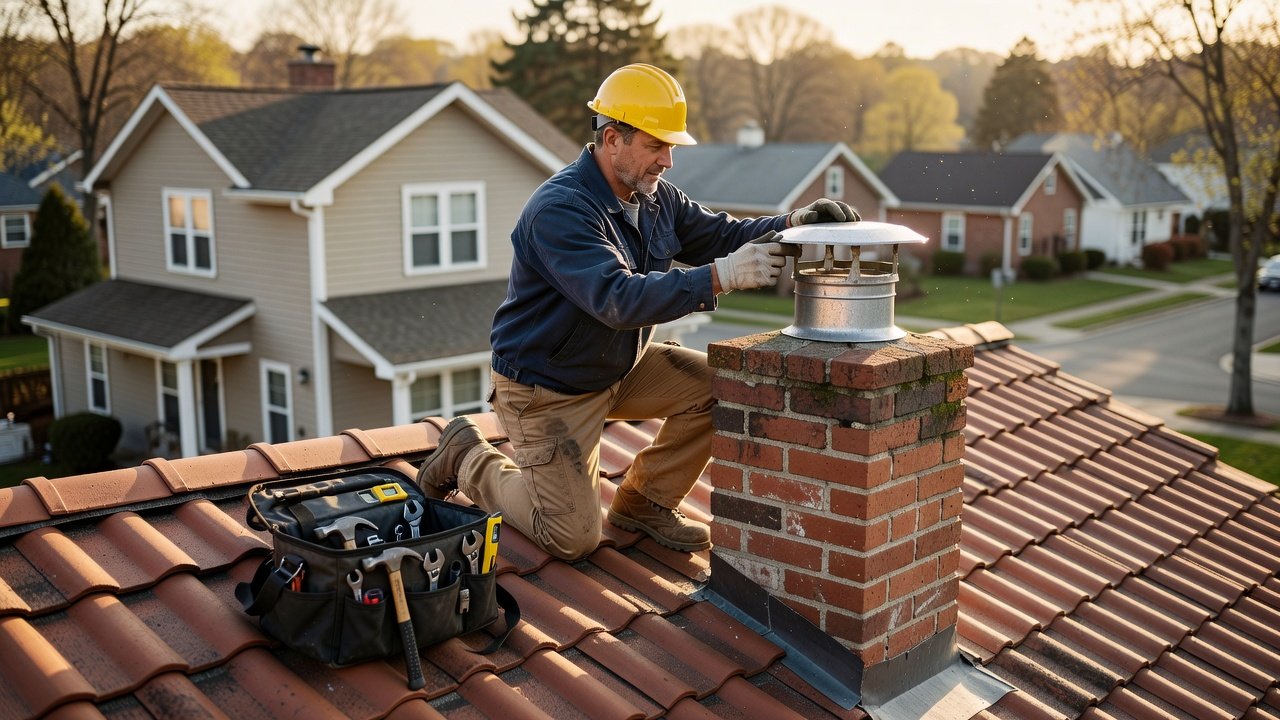
Hiring Someone to Install a Chimney Cap in Little Falls: What to Ask, What to Avoid, and What You Can Actually Do Yourself
A chimney cap is a small piece of metal with an outsized job. It keeps rain out of your flue, blocks animals from nesting inside, and helps prevent wind-driven embers from landing on your roof. In Little Falls and across Passaic County, the freeze-thaw cycles between November and March can cause serious damage to uncapped chimneys. Water gets in, freezes, expands, and cracks mortar joints faster than most homeowners realize. The NFPA estimates that water penetration is among the leading causes of chimney deterioration in the northeastern United States, and a properly fitted cap is one of the simplest lines of defense. That said, not every chimney cap job is the same, and not every contractor offering the service knows what they’re doing. This guide is about helping you hire the right person, not any particular company.
What a Homeowner Can Actually Handle
Let’s be direct about the DIY question because a lot of online content glosses over it. Buying a cap at a hardware store and installing it on top of a standard single-flue chimney is something a handy homeowner can manage if the chimney crown is in good shape, the flue tile is a standard size, and the roof pitch isn’t steep.
Stainless steel single-flue caps typically run roughly $30 to $80 at retail. The installation may take about 20 minutes if everything fits properly.
What you cannot evaluate from the ground, or from a quick roof visit without training, is the condition underneath. In Little Falls specifically, homes built before the 1970s often have older clay flue liners with hairline cracks that only show up during a proper Level 1 or Level 2 inspection. You won’t see those simply by putting a cap on.
You also won’t notice if the chimney crown itself is cracked and allowing water to bypass the cap entirely, which makes the cap installation ineffective from day one. A cap won’t fix a failing crown. It won’t fix a missing flashing seal where your chimney meets the roof deck, either.
If you install a cap yourself without knowing the condition of what’s below it, you may spend $50 on hardware while a $400 crown repair remains unaddressed and eventually turns into a $2,000 liner repair by spring.
So, install it yourself if you’re comfortable working on a roof, the chimney is known to be in good condition based on a recent inspection, and your flue is a standard single rectangular tile. Call a professional if any of those conditions aren’t met.
The Credentials That Actually Matter
When you’re looking at chimney contractors in Passaic County, two certifications are worth asking about directly.
The Chimney Safety Institute of America (CSIA) certifies sweeps who pass a technical exam covering installation standards, codes, and safety. A CSIA-certified sweep has demonstrated knowledge beyond cleaning. They understand flue sizing, cap specifications, draft requirements, and NFPA 211, the standard that governs chimney installation and clearances in residential buildings.
The National Fireplace Institute (NFI) offers a separate certification track with a different but equally credible exam. Some contractors hold both certifications.
Neither certification is legally required to operate in New Jersey, which is exactly why you need to ask about them. Anyone with a truck and a ladder can call themselves a chimney company. Certification provides an independent indication that someone has been tested on the knowledge they claim to have.
Questions to Ask Before You Hire
Ask these questions before you agree to anything or accept an estimate.
Are you CSIA-certified, and can I see your certificate number?
CSIA maintains a public lookup at csia.org. Verify the certification yourself.
What size and style of cap do you recommend for my flue, and why?
A contractor who can’t explain the sizing rationale, including single flue versus multi-flue configurations, mesh gauge, and clearance above the flue tile, may not have enough experience with the job.
Will you inspect the crown and flashing while you’re up there?
A cap installation without a visual check of the surrounding components is incomplete work.
What material is the cap?
Galvanized steel is cheaper but typically lasts five to 10 years in New Jersey winters before rusting. Stainless steel costs more upfront but is often a better choice in a climate with road salt in the air and temperature swings from the teens to 90 degrees.
Are your business insured for roof and chimney work?
Ask specifically for general liability and workers’ compensation coverage. If someone falls from your roof without workers’ compensation coverage, you could face financial exposure.
What does your written estimate include, and what might change it?
Legitimate contractors will explain that findings on the roof may reveal additional needs. That’s honest. What you’re watching for is whether they communicate that upfront or only mention it after they’re already on the roof.
Do you pull permits when required?
In some Passaic County municipalities, chimney work beyond a simple cap replacement may trigger a permit requirement. A contractor who’s unfamiliar with local codes or dismisses the question is a yellow flag.
Red Flags That Signal a Bad Operator
Storm chasers sometimes show up in Little Falls and Garfield neighborhoods after major wind events, knocking on doors and claiming to have spotted damage from the street. Some are legitimate. Many are not.
Be skeptical of any contractor who won’t provide a written estimate before starting work, can’t produce proof of insurance, or pressures you to make a decision the same day they show up.
Unusually low quotes also deserve scrutiny. A chimney cap installation in northern New Jersey typically runs $150 to $400 installed, depending on the number of flues, cap material, and roof access difficulty. Quotes significantly below that range may mean you’re getting lower-grade galvanized hardware, no crown inspection, or a contractor who won’t be reachable when the cap fails 18 months later.
Also be cautious if a contractor tells you your entire flue liner needs immediate replacement without providing photo documentation. Camera inspections are standard for Level 2 inspections, and a reputable company should be willing to show you the footage. If someone recommends a $3,000 liner relining based only on a visual inspection from the top, get a second opinion.
How to Compare Quotes Fairly
Get at least two estimates, and make sure you’re comparing the same scope of work.
One quote might include a stainless steel multi-flue cap, a crown inspection, and a sealant coat. Another might be for a galvanized single-flue cap with no additional service. Those aren’t the same job at different prices. They’re different jobs.
Ask each contractor to itemize the cap material and gauge, labor, any crown or flashing assessment, and what happens if they find something that needs repair once they’re on the roof.
A good estimate will answer those questions in writing before you sign anything.
If you’re in Little Falls and your chimney hasn’t been inspected in the last three years, it’s worth scheduling a Level 1 inspection before or alongside the cap installation. CSIA standards recommend annual inspections for chimneys in regular use, and a cap alone won’t tell you what’s happening inside the flue.
The team at Chimney Passaic serves Little Falls and surrounding Passaic County communities, including Clifton, Garfield, and Wayne. If you’re not sure whether your chimney cap needs replacement, or if you’ve never had the flue inspected, contact us for a free inspection. We’ll tell you what we see and what you actually need, with no pressure and no invented problems.
Related from Chimney Passaic NJ: Annual Chimney Inspection County – Professional Chimney Safety Inspect · Chimney Liner Repair in Passaic, NJ · Chimney Sweep in Passaic, NJ – Professional Cleaning & Safety Inspecti