Chimney Cleaning in Little Falls, NJ: What You Can Handle Yourself and When to Call a Professional
Many homes throughout Little Falls feature traditional masonry fireplaces that have been serving families for decades. While these fireplaces can provide warmth and comfort during New Jersey’s cold winters, they also require regular maintenance to remain safe and efficient.
One of the most common questions homeowners ask is whether chimney cleaning is something they can handle themselves or if it’s best left to a professional.
The answer is that both approaches have their place. Some routine maintenance tasks are perfectly safe for homeowners. Others require specialized equipment, professional training, and a thorough understanding of chimney safety standards.
Here’s what every Little Falls homeowner should know before lighting the first fire of the season.
What a Professional Chimney Cleaning Includes
A professional chimney cleaning involves much more than brushing soot out of the flue.
A complete service typically includes:
- Removing creosote buildup from the chimney liner
- Cleaning soot and debris from the firebox
- Inspecting the chimney for structural damage
- Checking the damper for proper operation
- Examining the chimney cap and crown
- Evaluating the overall safety of the venting system
The primary goal is to remove combustible creosote while identifying developing problems before they become expensive repairs.
According to NFPA 211, chimneys should be inspected annually and cleaned whenever creosote buildup reaches approximately 1/8 inch.
Routine maintenance helps reduce the risk of chimney fires and keeps the fireplace operating safely throughout the heating season.
Understanding Creosote Buildup
Every wood-burning fireplace produces creosote. As smoke travels through the chimney, cooling gases leave behind combustible deposits on the chimney liner.
The Chimney Safety Institute of America (CSIA) classifies creosote into three stages:
Stage 1 consists of light, powdery soot that can usually be removed during a routine chimney cleaning.
Stage 2 becomes thicker and tar-like, requiring more aggressive cleaning methods.
Stage 3 develops into a hard, glazed coating that is highly flammable and often requires specialized chemical treatments or rotary cleaning equipment.
The amount of creosote present largely determines the cleaning method required.
Chimney Maintenance You Can Safely Do Yourself
There are several maintenance tasks that homeowners can safely perform between professional inspections.
Clean Out the Firebox
Once all ashes have cooled completely, remove excess ash using a metal shovel and store it in a metal container.
Brush away loose soot from the firebox walls and keep the area around the fireplace clean. Never vacuum hot ashes or store them in plastic containers.
Perform a Basic Visual Inspection
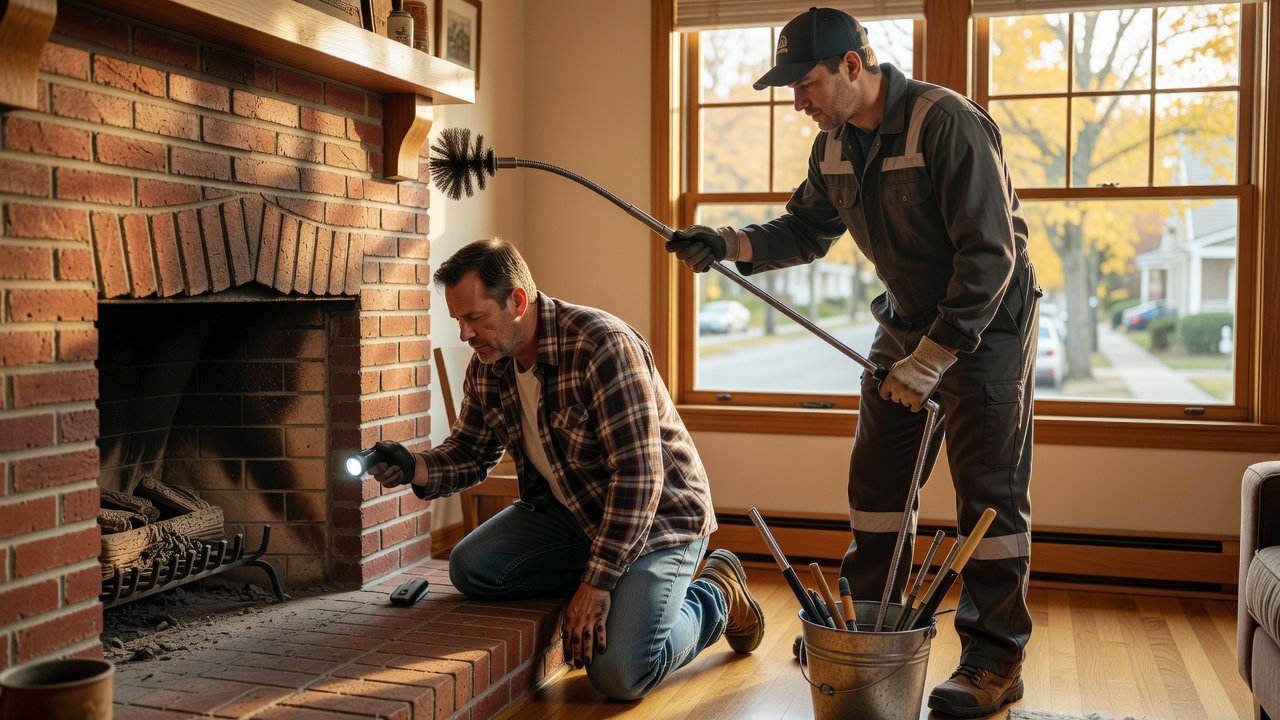
Open the damper and shine a flashlight into the chimney.
Look for:
- Large debris
- Animal nests
- Obvious blockages
- Loose masonry
- Visible damage near the smoke chamber
While you won’t be able to inspect the entire chimney from below, you may notice problems that warrant professional attention.
Inspect the Chimney Cap
If you can safely view the chimney from the ground—or safely access the roof—you can check whether the chimney cap is:
- Missing
- Rusted
- Clogged with leaves
- Blocked by bird nests
A properly functioning chimney cap helps keep rain, animals, and debris out of the flue.
Check the Damper
Open and close the fireplace damper to ensure it moves freely. If the mechanism feels stiff, a high-temperature lubricant may help restore smooth operation. However, warped or damaged dampers should be repaired or replaced by a professional.
When It’s Time to Call a Professional
Some chimney work simply requires specialized equipment and training.
Heavy Creosote Removal
If your chimney contains Stage 2 or Stage 3 creosote, professional cleaning is strongly recommended.
Certified chimney technicians use:
- Rotary cleaning systems
- Commercial HEPA vacuums
- Specialized brushes
- Chemical creosote treatments
- Camera inspection equipment
Attempting to remove heavy creosote without proper equipment can spread hazardous soot throughout the home and may leave dangerous deposits behind.
Level 2 Chimney Inspections
A Level 2 inspection is recommended whenever:
- A home is being bought or sold
- A chimney fire has occurred
- A heating appliance has been replaced
- Structural damage is suspected
These inspections require specialized camera systems capable of evaluating the full length of the chimney liner. This type of inspection cannot be duplicated with standard homeowner tools.
Chimney Crown and Smoke Chamber Repairs
Cracks in the chimney crown or smoke chamber should always be repaired using specialized refractory materials designed for high temperatures. Improper repairs can allow heat or combustion gases to escape into surrounding walls.
Gas Fireplace Service
Gas fireplaces and inserts should always be serviced by qualified professionals familiar with New Jersey gas appliance requirements. Gas valves, burners, pilot assemblies, and venting systems require specialized knowledge and should never be repaired as DIY projects.
Shared Chimney Systems
Many older homes throughout Little Falls use one chimney to vent both a fireplace and an oil or gas heating appliance. These systems require careful inspection to ensure both appliances vent safely. Improper cleaning or repair can interfere with exhaust flow and create carbon monoxide hazards.
Why Professional Inspections Matter
Some of the most serious chimney problems remain completely hidden until they become dangerous.
Professional inspections can uncover:
- Hidden chimney liner cracks
- Water intrusion
- Masonry deterioration
- Draft problems
- Excessive creosote buildup
- Chimney cap damage
- Damper failure
Identifying these issues early often prevents costly repairs while helping keep your home safe.
Understanding the Risks of Delaying Maintenance
Neglected chimneys can develop significant safety hazards over time. Heavy creosote accumulation greatly increases the risk of chimney fires, while damaged liners or blocked flues can allow carbon monoxide to enter the home.
Many chimney problems develop gradually and produce few visible warning signs until substantial damage has already occurred. Routine maintenance is far less expensive than repairing major chimney damage after years of neglect.
Schedule a Professional Chimney Inspection in Little Falls
Whether you perform basic maintenance yourself or rely entirely on professional service, every chimney benefits from a thorough annual inspection. Knowing the condition of your chimney before heating season begins provides peace of mind and helps ensure your fireplace operates safely all winter long.
Chimney Passaic proudly serves homeowners throughout Little Falls, Clifton, Garfield, Wayne, and surrounding Passaic County communities.
Our experienced technicians provide comprehensive chimney inspections, professional chimney cleanings, and honest recommendations based on the actual condition of your fireplace and chimney system.
Contact Chimney Passaic today to schedule your free chimney inspection consultation and make sure your chimney is ready before the first fire of the season.
Related from Chimney Passaic NJ: Chimney Sweep in Passaic, NJ – Professional Cleaning & Safety Inspecti · Annual Chimney Inspection County – Professional Chimney Safety Inspect